Handwriting Practice Worksheets | Lines for Visual Skill Building
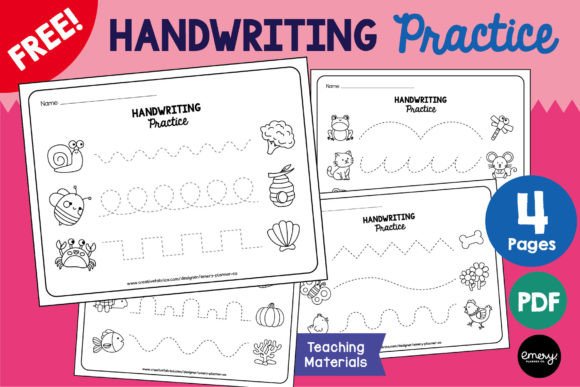
In the digital-first landscape of modern graphic design, the foundational skill of precise line work remains a cornerstone of professional execution. Handwriting Practice Worksheets | Lines offer a surprisingly relevant tool for designers, marketers, and creators seeking to refine their manual dexterity, enhance visual consistency, and inject authentic, human-centric elements into their branding and communication projects. This free printable resource, focused on tracing dotted lines, is more than a simple educational aid; it's a practical exercise in control, rhythm, and the deliberate application of mark-making—skills directly transferable to creating cohesive brand identities, elegant typography, and compelling visual narratives.
The Design Principle Behind the Practice
At its core, effective graphic design is about controlled communication. Every line in a logo, every stroke in a custom font, and every path in an icon contributes to a brand's visual hierarchy and overall aesthetic. Practicing on structured worksheets helps internalize the muscle memory and focus required for clean vector work in software like Adobe Illustrator or Figma. This deliberate practice improves your ability to execute smooth curves, consistent angles, and balanced compositions, which are critical in logo design, custom lettering, and creating scalable brand assets that maintain integrity across all media.
Practical Applications in Creative Projects
Integrating such foundational exercises into your design workflow can yield tangible benefits across numerous applications:
- Branding & Logo Design: Develop a steadier hand for sketching initial concepts and refining vector paths, ensuring your logos are crisp and professional at any size.
- Marketing Materials: Improve the quality of hand-drawn elements for social media graphics, flyers, and posters, adding a unique, artisanal touch that stands out in digital feeds.
- Editorial & Packaging Design: Enhance your ability to create custom illustrations, decorative borders, or typographic flourishes that elevate page layouts and product packaging with a personal feel.
- UI & Web Design: While primarily digital, the principle of precise line work underpins the creation of clean icons, intuitive interface elements, and visually balanced layouts that improve user experience (UX).
Tips for Effective Implementation
To maximize the value of design-focused practice, consider these approaches:
- Consistency is Key: Use the worksheets to train for uniformity in your strokes. This translates directly to maintaining consistent stroke weights in icons and letterforms, a hallmark of professional typography and visual design.
- Focus on Readability: The act of tracing clean lines reinforces the importance of clarity. Apply this mindset to ensure your typographic choices and visual hierarchies communicate messages without ambiguity.
- Bridge Analog and Digital: Use the printed worksheets for warm-ups or brainstorming sessions. Then, challenge yourself to recreate the same level of precision and flow digitally, strengthening your overall design workflow.
Ultimately, investing time in honing fundamental skills like line control is an investment in the quality of your creative output. Whether you are crafting a brand's visual identity, designing compelling marketing collateral, or developing user interfaces, the precision and intentionality fostered by such practice lead to more polished, effective, and aesthetically resonant designs. Quality creative assets, including thoughtful practice tools, empower you to execute your vision with confidence and technical excellence.